Product category • Tiger-Vac • Delfin

3D Printing

Safe dust management for additive manufacturing and 3D printing — from plastic powder in the laboratory to self-igniting metal powder in classified production zones. Particulair’s range covers the full spectrum with ATEX- and IECEx-certified solutions from Tiger-Vac and Delfin, third-party certified to EN 17348.

Certifications: ATEX 2014/34/EU IECEx 3rd party EN 17348 NFPA 484

3D Printing — 16 models
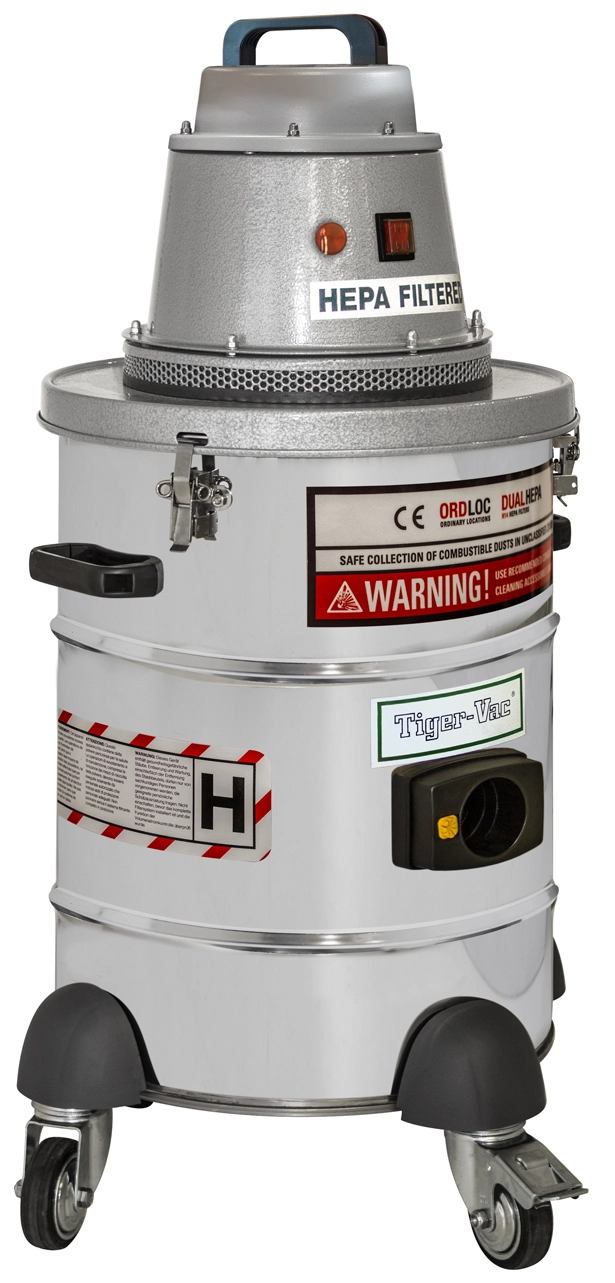
2D-10 (4W) HEPA ORDLOC

Tiger-Vac

2D-10 (4W) HEPA ORDLOC

Safe dry vacuum for combustible plastic powder in unclassified locations. HEPA H14. Conductive recovery bag. ESD safe. 75 dB(A). 3D printing accessories kit included.

2D-10 (IT-40L) CFE HEPA ORDLOC

Tiger-Vac

2D-10 (IT-40L) CFE HEPA ORDLOC

Water immersion vacuum for reactive metal powder in unclassified locations. Wet mix inerting. Dual HEPA H14. Coalescing filter. ESD safe. SS 304. Brushless motor available. 75 dB(A).
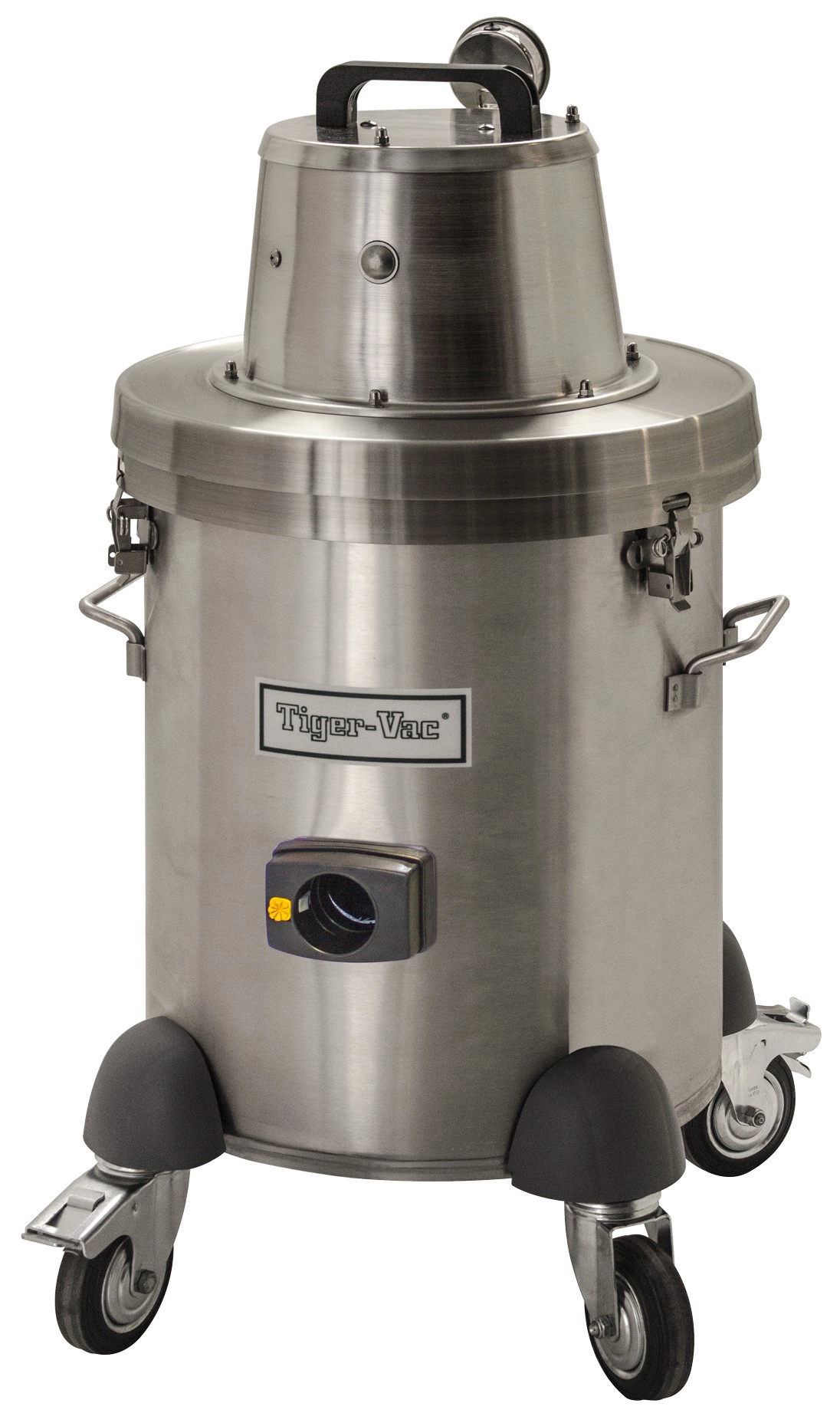
ATEX-10A (40L) HEPA

Tiger-Vac

ATEX-10A (40L) HEPA

Pneumatic ATEX II 2GD vacuum cleaner for combustible plastic powder from 3D printing. Continuous duty. HEPA H14. Stainless steel AISI 304. Zone 1/21. 68 dB(A). Pressure regulator and 3D tool kit included.

ATEX-10A (IT-40L) CFE HEPA

Tiger-Vac

ATEX-10A (IT-40L) CFE HEPA

Pneumatic ATEX II 2GD water immersion vacuum. Continuous duty. Wet mix inerting. Coalescing HEPA. SS 304. Zone 21 external. Degassing vent. 68 dB(A).
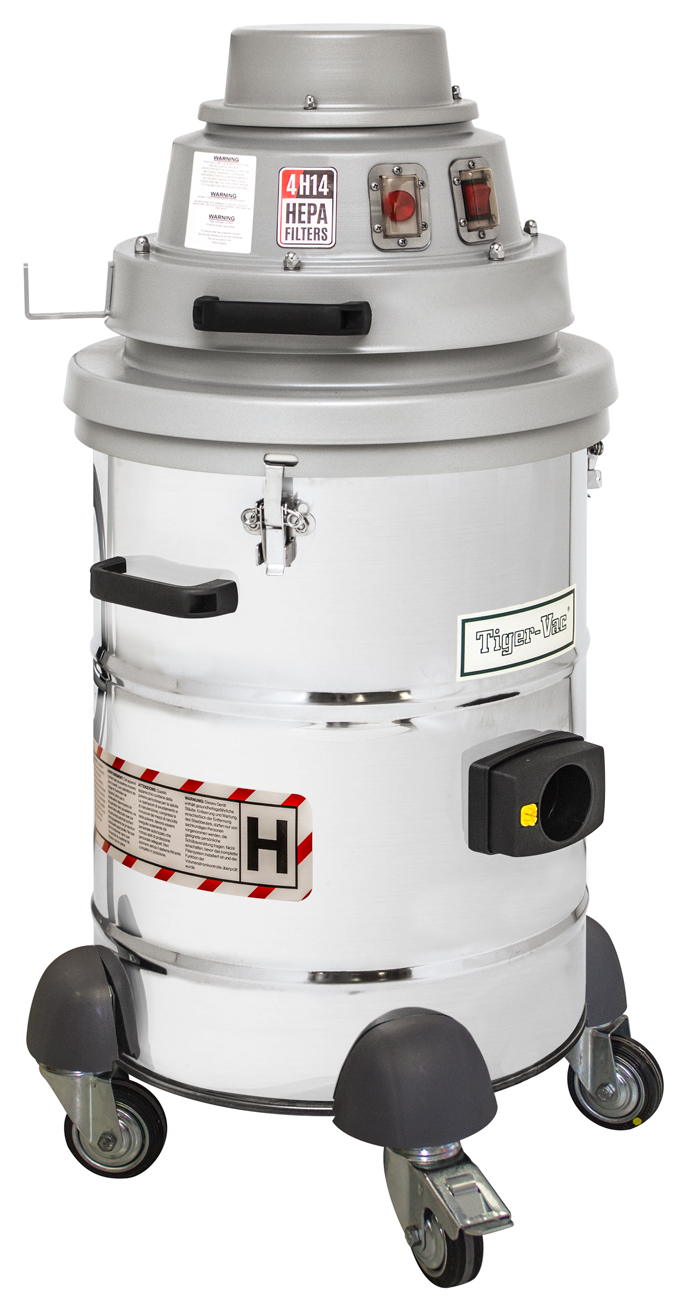
C-10 EX (4W)

Tiger-Vac

C-10 EX (4W)

ATEX II 1/3D dry vacuum with formally attested Zone 20 internal protection. 4×HEPA H14. ESD safe. Zone 22 external. Stainless steel. Brushless motor available. IECEx. 72 dB(A).

C-10 EX (IT-40L) CFE HEPA

Tiger-Vac

C-10 EX (IT-40L) CFE HEPA

ATEX II 1/3D water immersion vacuum with formally attested Zone 20 internal. Wet mix inerting. Coalescing HEPA. ESD safe. SS 304. Brushless motor available. IECEx. 72 dB(A). 28.1 kg.

C-10 EX DT (PRS-HEC)

Tiger-Vac

C-10 EX DT (PRS-HEC)

ATEX II 1/3D PRS powder recovery system. Zone 20 internal attested. Integrated cyclone (98%). HEPA H14. ESD safe. SS 304. Brushless motor available. IECEx. 72 dB(A). 25 L.
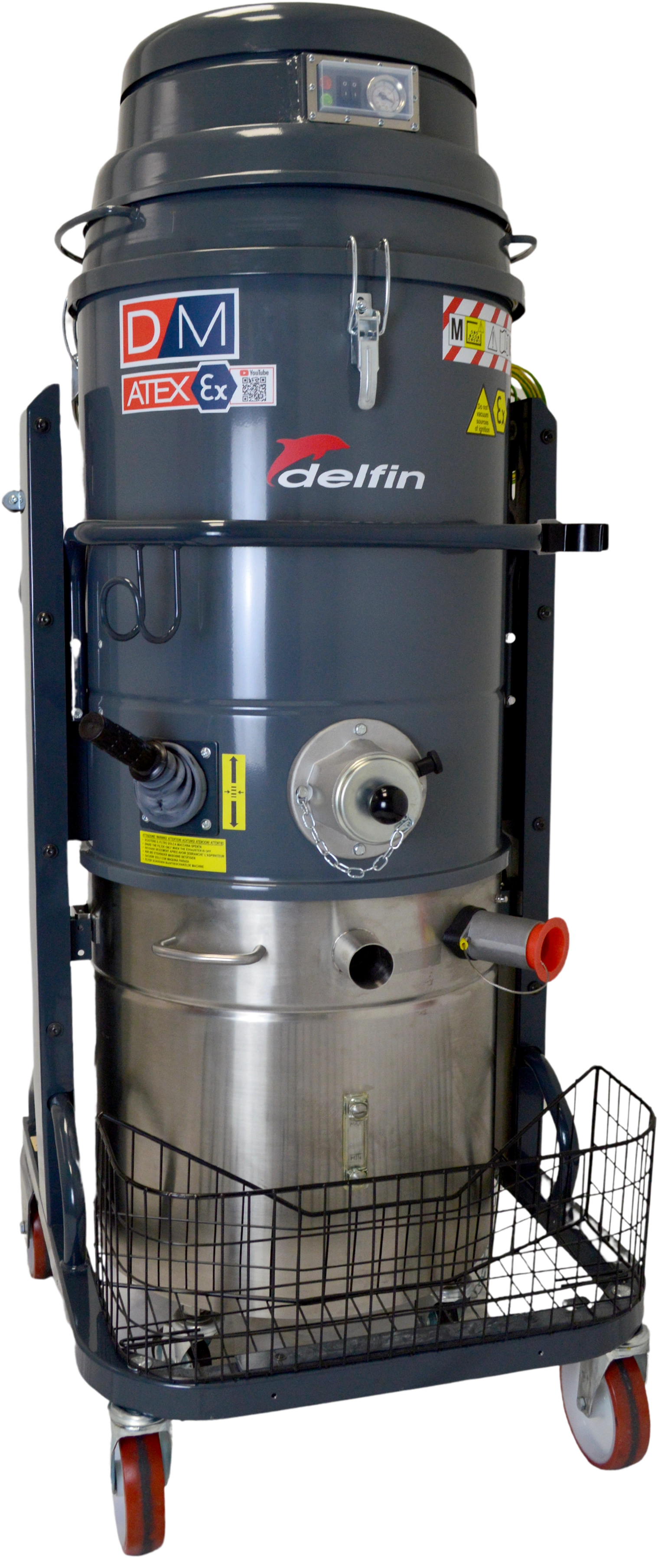
DM2 1/2D INERT

Delfin

DM2 1/2D INERT

Medium ATEX II 1/2D oil inerting vacuum for self-igniting metal powder. TEFC motor. Zone 20 internal and Zone 21 external attested. HEPA H14. AISI 304. IECEx. 74 dB(A). 90 kg.
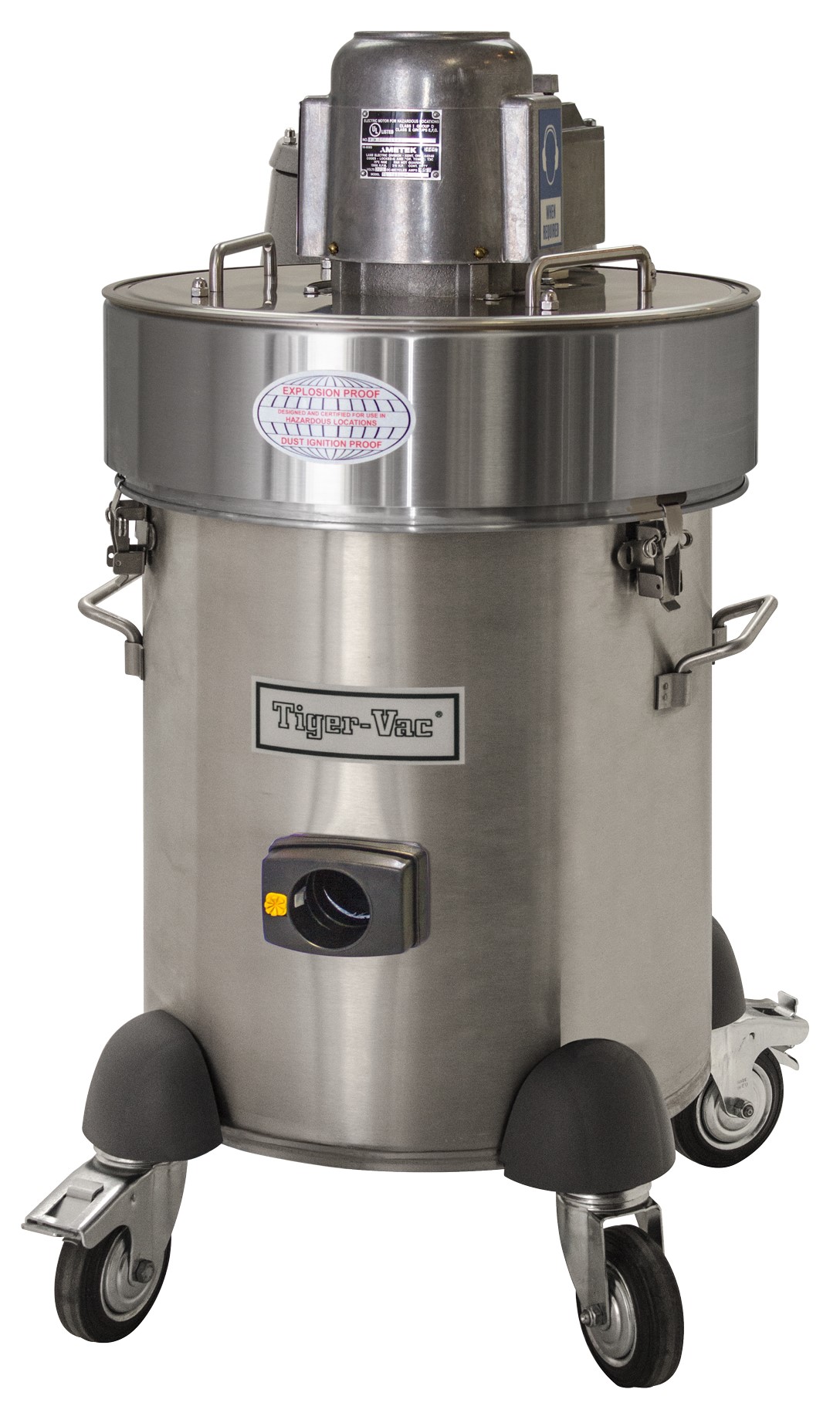
EXP1-10 (40L) HEPA

Tiger-Vac

EXP1-10 (40L) HEPA

Compact ATEX II 2GD dry vacuum for plastic powder in 3D printing. TEFC motor. HEPA H14. Stainless steel 304. Zone 21 external. For medical and dental 3D printing. 78/85 dB(A).

EXP1-10 (IT-40L) CFE HEPA

Tiger-Vac

EXP1-10 (IT-40L) CFE HEPA

ATEX II 2GD water immersion vacuum for reactive metal powder. TEFC motor. Wet mix inerting. Coalescing HEPA. Degassing vent. SS 304. Zone 21 external. 78/85 dB(A). 31.8 kg.

EXP1-20 DT (PRS-HEC)

Tiger-Vac

EXP1-20 DT (PRS-HEC)

ATEX II 2GD PRS powder recovery system with high-efficiency integrated cyclone (98%). TEFC motor. HEPA H14. SS 304. 25 L detachable tank. Zone 21 external. IECEx. 78/85 dB(A). 98 kg.
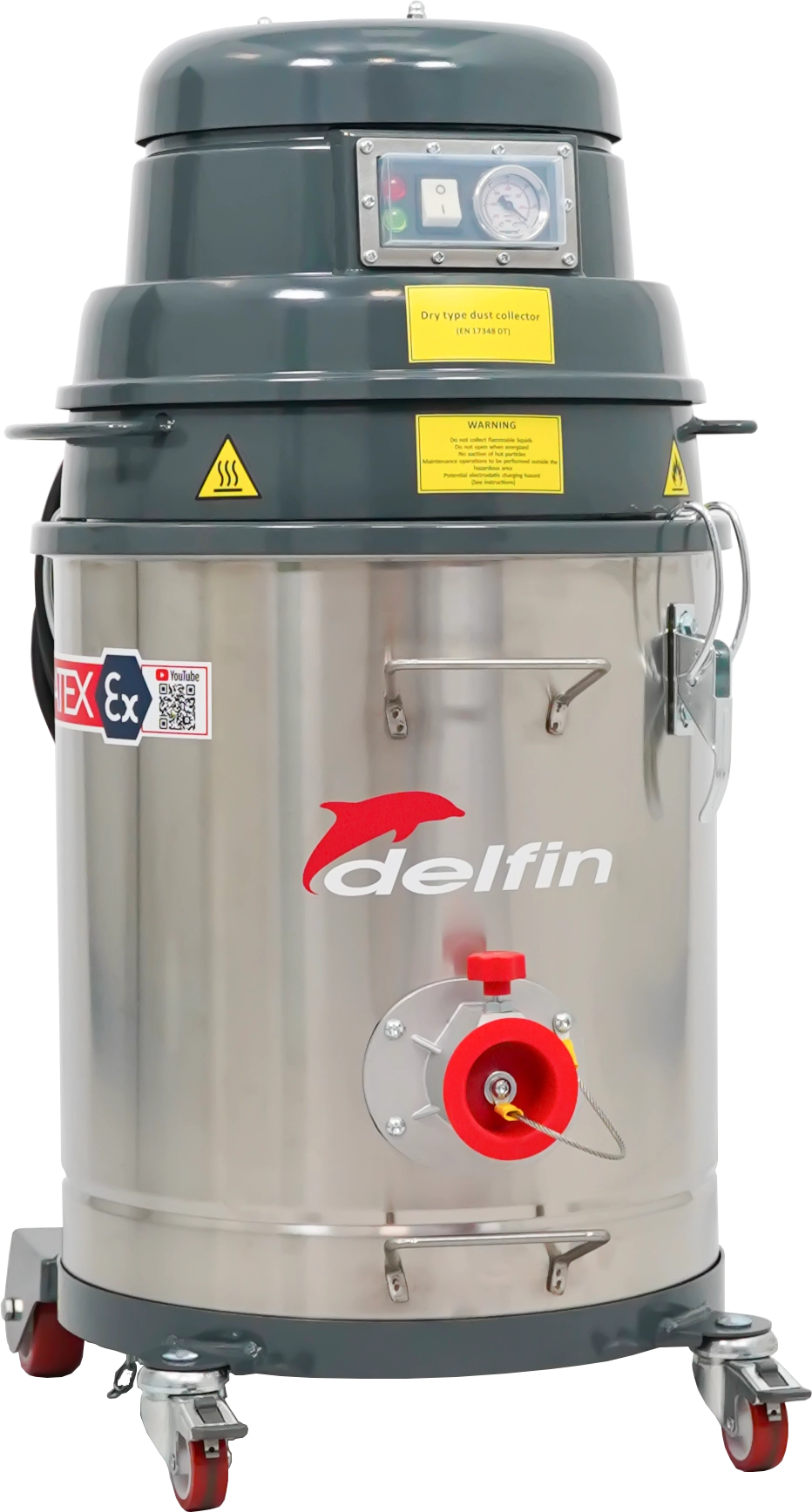
MTL 301 1/2D

Delfin

MTL 301 1/2D

Compact ATEX II 1/2D dry vacuum with Dust Tight IP64 protection. Zone 20 internal and Zone 21 external attested. HEPA H14. AISI 304. Brushless motor available. IECEx. 74 dB(A). 26 kg.
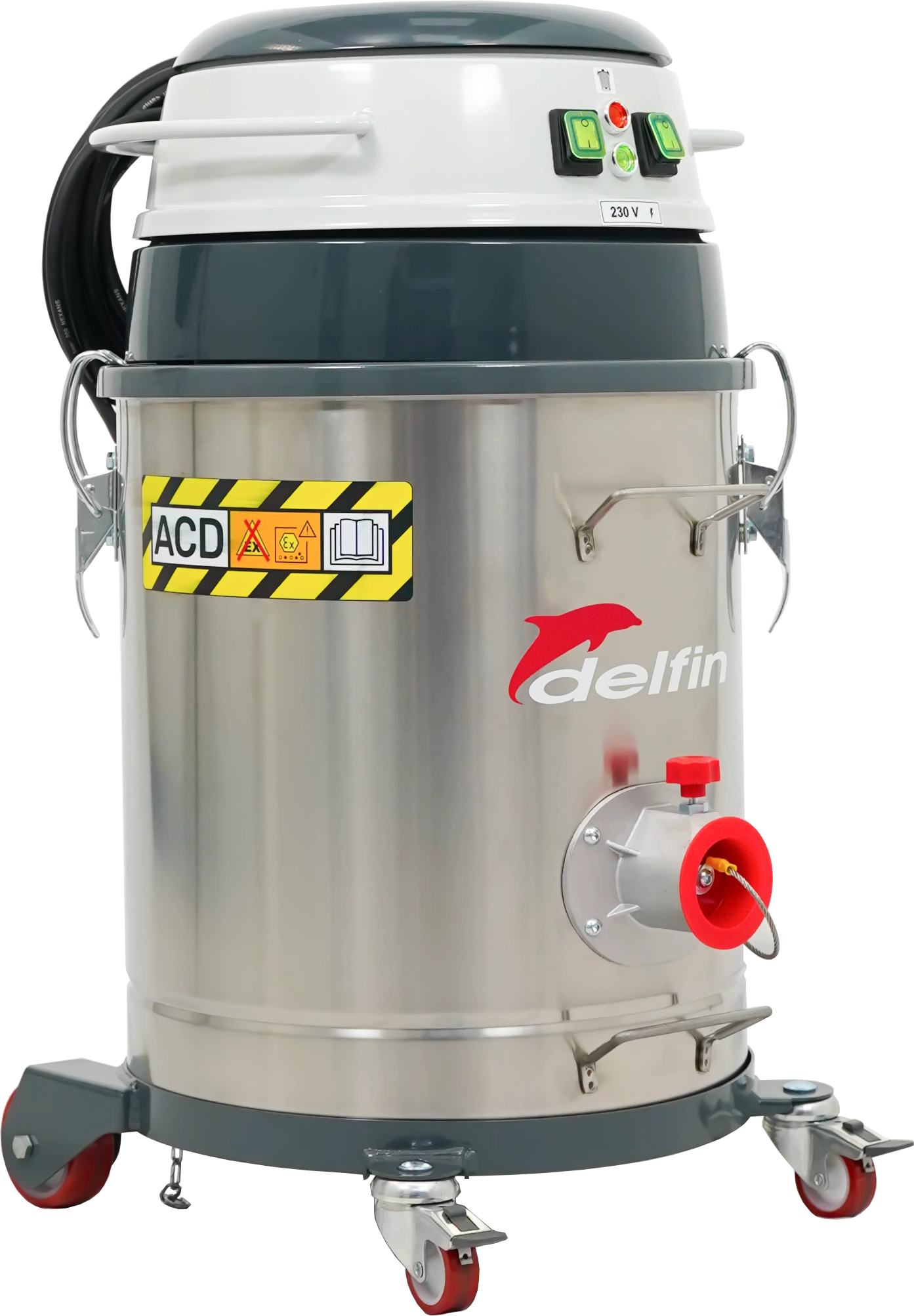
MTL 302 ACD

Delfin

MTL 302 ACD

ACD vacuum cleaner for combustible plastic powder in unclassified locations. II 1/-D: Zone 20 internal certified by IMQ (NB 0738). HEPA H14. AISI 304. 2.2 kW. 360 m³/h. 74 dB(A). EN 17348.
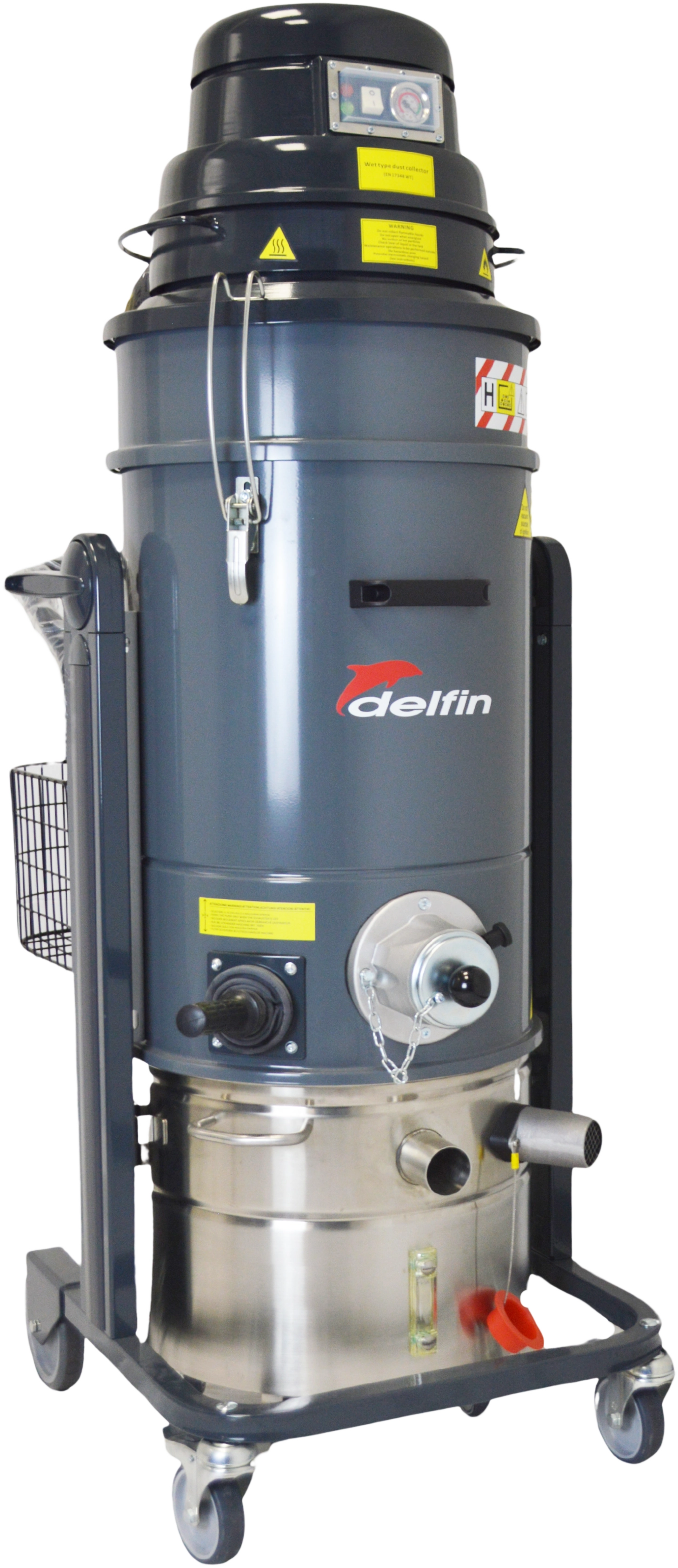
MTL 451 1/2D INERT

Delfin

MTL 451 1/2D INERT

Compact ATEX II 1/2D oil inerting vacuum for self-igniting metal powder. TEFC motor. Zone 20 internal and Zone 21 external attested. HEPA H14. AISI 304. IECEx. 74 dB(A). 52 kg.

SS-20 DT (PRS-HEC)

Tiger-Vac

SS-20 DT (PRS-HEC)

Pneumatic ATEX II 2GD PRS powder recovery system. Continuous duty. Integrated cyclone (98%). HEPA H14. SS 304. 25 L detachable tank. IECEx. 72 dB(A). 95 kg.
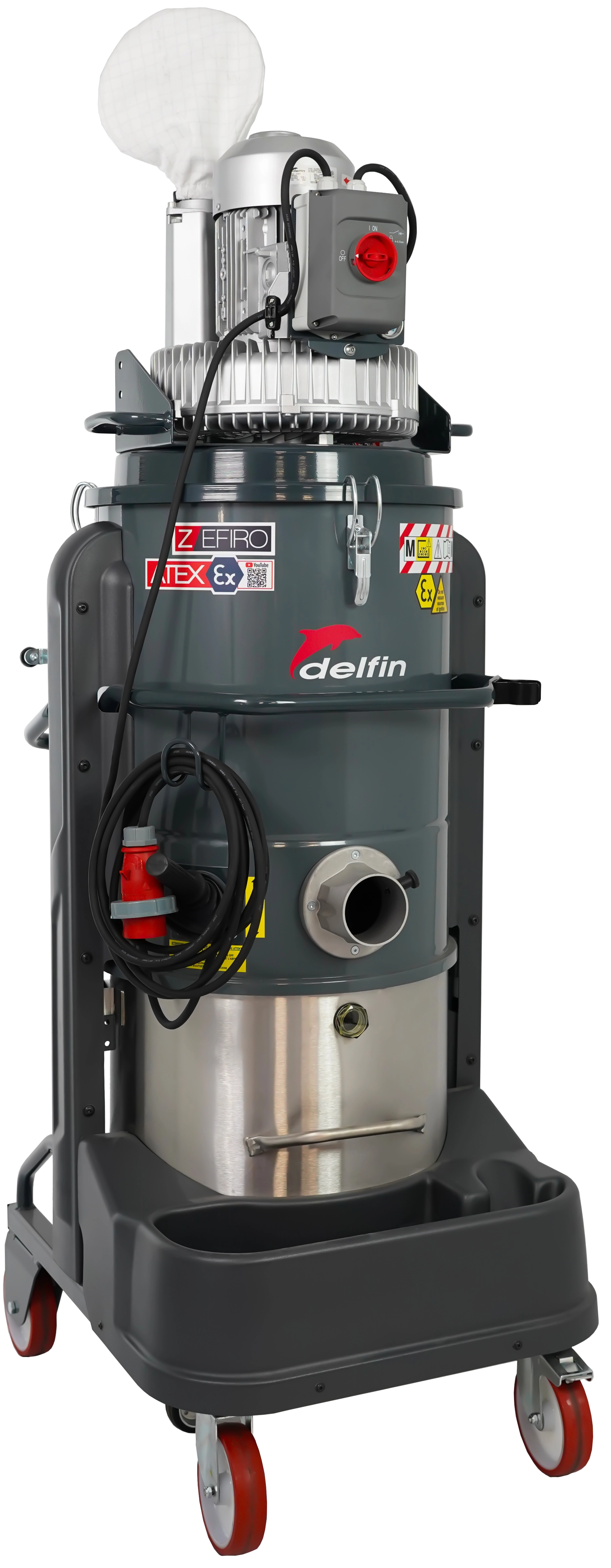
Zefiro 75 INERT

Delfin

Zefiro 75 INERT

Large ATEX II 3D oil inerting vacuum with side channel blower for continuous duty. For self-igniting metal powder in Zone 22. HEPA H14. AISI 304. Three phase. 75 dB(A). 95 kg.


Dust management for 3D printing and additive manufacturing

Additive manufacturing places particular demands on dust management. Whether you print with polymer powders such as nylon and PEEK, metallic powders for laser sintering, or highly reactive materials such as aluminium and titanium, the safe collection and disposal of powder residues is not merely a matter of cleanliness — it is a regulatory requirement and a safety-critical task. Particulair has advised Nordic companies on industrial vacuum technology in technically demanding environments since 1991, and our range for 3D printing covers the full spectrum from simple laboratory cleaning to continuous operation in ATEX-classified production environments.

Plastic powder

Printing processes using polymer powders such as nylon PA12, PEEK and TPU leave fine dust residues in and around the build chamber. These particles are combustible and can under certain conditions form explosive dust clouds, particularly when disturbed or inadvertently dispersed in the air. Although many laboratories and development departments are not formally ATEX-classified, applicable safety regulations require that collection equipment is documented as safe for combustible dust. The machines in this category are either fully ATEX-certified by a third party or carry ACD marking per IEC 60335-2-69 with internal Zone 20 protection — and all are equipped with HEPA H14 filtration and ESD-safe accessories.

Metal powder

Metallic powders for powder bed fusion and direct metal laser sintering are combustible, electrically conductive and typically classified as dust group IIIC. They require ATEX-certified machines with a water immersion system, where the vacuumed powder is neutralised directly in a water bath inside the collection tank. This method — known as wet mix inerting — prevents powder from reaching the filters and eliminates the risk of ignition inside the machine. The machines in this category are third-party certified to ATEX 2014/34/EU and EN 17348, and are available in electric versions with TEFC motors or pneumatic versions for continuous duty.

Powder recovery

In powder bed fusion printing, large quantities of unused powder remain in the build chamber and powder bed after each job. Powder for metal 3D printing is expensive — recovery is not only sustainable, it is economically critical. The machines in this category are equipped with an integrated high-efficiency cyclone system that separates up to 98 percent of the powder before it reaches the filters, collecting it cleanly in a separate detachable stainless steel tank ready for sieving and reuse. The system is designated PRS — Powder Recovery System. Machines are available in electric versions with TEFC motors and pneumatic versions for continuous duty, and are third-party certified to ATEX and IECEx for conductive dust group IIIC.

Self-igniting powder

A particular category of metal powders — including aluminium, magnesium and titanium in fine particle form — are pyrophoric or self-igniting. These materials can ignite spontaneously on contact with air, moisture or frictional heat, and in some cases react chemically with water. For these powders, water immersion is insufficient as a safety barrier. The machines in this category use oil as the inerting medium: the vacuumed powder is completely surrounded by oil inside the collection tank, eliminating any contact with oxygen and making ignition impossible. This protection method — known as oil inerting — is the internationally recognised solution for pyrophoric metal powders in additive manufacturing. The machines are certified Category 1/2D with Zone 20 internal and Zone 21 external, attested by a notified body to ATEX 2014/34/EU and IECEx.

Powder handling in additive manufacturing

Additive manufacturing creates a dust problem unlike anything else in pharma. The powder is fine enough to form explosive clouds, often electrically conductive, and in some cases valuable enough that it should be recovered rather than disposed of. The three considerations pull in different directions, which is why this category is organised by powder type rather than by machine size.

What the models have in common is documented safety for combustible dust, either ATEX certified or marked ACD to IEC 60335-2-69 with internal Zone 20 protection, and third party certification to EN 17348.

Start with the powder, not with the machine

Choose first on the basis of what you print with. Polymer powders such as nylon, PEEK and polyamide require documented safety against combustible dust. Metal powders for laser sintering additionally require water immersion, because the powder is both combustible and conductive. And for the most reactive metals, meaning aluminium, magnesium and titanium in fine form, water is insufficient, because it can react chemically with the powder and release hydrogen. Oil is used as the inerting medium instead.

Always consult the powder supplier's safety data sheet before putting equipment into service. If you are in doubt, contact us. We have seen most combinations.

Need advisory on powder handling for 3D printing?

We help specify the right system for your machine, your powder and your ATEX classification.

Other Particulair universes