Tiger-Vac SS-10 (4W) RE HEPA (MRAC)
Pneumatic ATEX combined vacuum for Zone 1 gas and Zone 21 dust, driven by compressed air alone and without a single electrical part. Temperature class T6, activated carbon filter (MRAC) and HEPA H14 as standard, wet and dry recovery with 22.7 L of dust and 28.5 L of liquid on a 4-wheel dolly.
- Air-driven, so there are no electrical parts in the hazardous area
- ATEX temperature class T6, maximum 85 °C surface temperature
- HEPA H14 and activated carbon filter (MRAC) as standard
- Wet and dry: 22.7 L of dust and 28.5 L of liquid
- AISI 304 stainless steel, under 10 ohms throughout the ESD chain
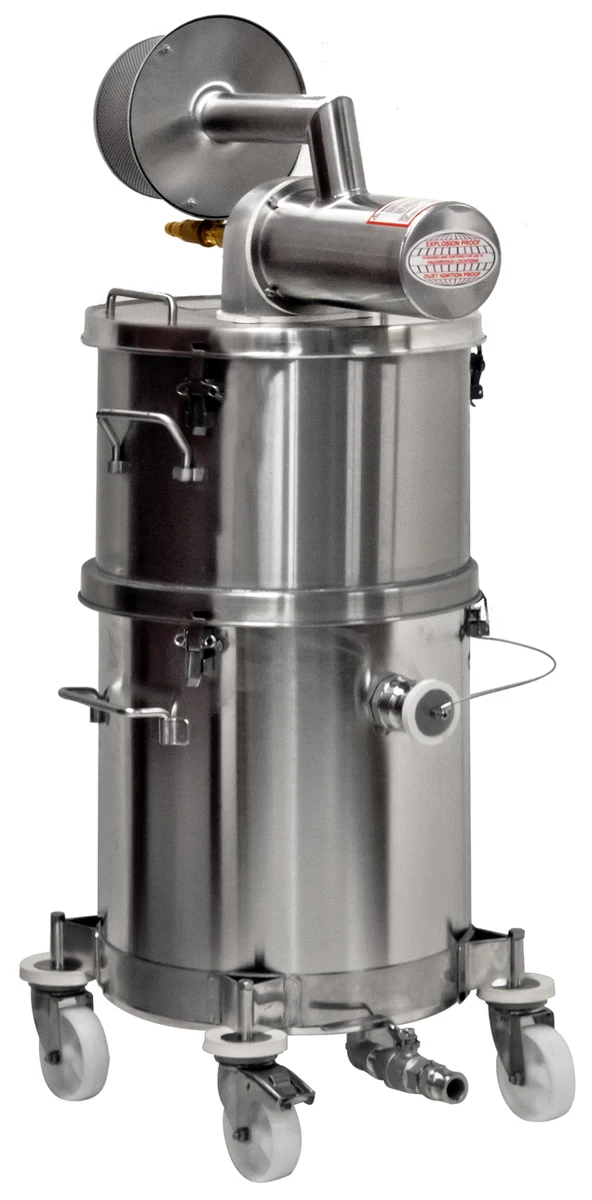
- ATEX Directive 2014/34/EU: II 2GD Ex h IIC T6 Gb / Ex h IIIC T85°C Db
- LCIE 03 ATEX 6310 X (third-party certificate)
- IECEx LCIE 17.0076 X
- EN 17348:2022 DT/LC for combustible dust and flammable liquids
- EN 1822 and IEST-RP-CC001 for HEPA H14
- EN ISO 11203 for sound pressure measurement
Tiger-Vac SS-10 (4W) RE HEPA (MRAC)
The Tiger-Vac SS-10 (4W) RE HEPA (MRAC) is the air-driven sister to the electric EXP1-10 (4W) RE HEPA (MRAC). Same cabinet, same tank sizes, same carbon ring and the same HEPA H14, but without a single electrical component. Suction is created by one 6 mm venturi, and because there is no motor, no sparks and no hot surface, the unit is certified in ATEX temperature class T6 with a maximum surface temperature of 85 °C, against the electric version's T3 at 200 °C.
The unit is dual-certified under ATEX (LCIE 03 ATEX 6310 X) and IECEx (LCIE 17.0076 X) and marked EN 17348 DT/LC, meaning both combustible dust and flammable liquids. Between the recovery tank and the motor head sits a Middle Ring with activated carbon (MRAC) that adsorbs toxic and corrosive vapours from the work air before it reaches the HEPA filter. The whole construction is AISI 304 stainless steel, and resistivity stays under 10 ohms throughout, castors, hose and tools included.
The typical job is cleaning and emptying in areas where both combustible dust and flammable vapours may be present, and where compressed air is easier to bring in than a certified electrical installation. With the straight suction wand 381162 the unit reaches all the way down into the bottom of an IBC tote through the fill opening. We show that step by step below.
Applications
- Emptying and bottom cleaning of IBC totes, drums and process vessels holding combustible residue
- Chemical and petrochemical production in Zone 1/21 where compressed air is more readily available than a certified electrical installation
- Cleaning around solvent plants, filling stations and mixing tanks
- Pharmaceutical production with volatile, toxic intermediates
- Plants where temperature class T6 is a requirement and a T3-rated electric unit will not do
- Clean-up after spills of flammable liquids, where both liquid and solids must be recovered
Technical specifications
| ATEX marking | II 2GD Ex h IIC T6 Gb / Ex h IIIC T85°C Db · LCIE 03 ATEX 6310 X · IECEx LCIE 17.0076 X · EN 17348 DT/LC |
|---|---|
| Internal / external zone | No internal zone. External Zone 21 for dust and Zone 1 for gas |
| Drive | Pneumatic venturi, single 6 mm nozzle, no electrical components |
| Temperature class | T6, maximum 85 °C surface temperature |
| Ambient temperature | -4 °C to +37 °C |
| Duty cycle | Continuous |
| Airflow | 204 m³/h |
| Vacuum | 448 mbar (4,570 mmH₂O) |
| Air consumption | 21.2 L/s (1,272 Nl/min) |
| Supply pressure | 5.5 bar |
| Air line connection | Ø 12.7 mm (1/2") |
| Minimum compressor | 15 HP |
| Sound pressure | 79 dB(A) to EN ISO 11203 |
| Filter class | H class |
| Filter type | HEPA H14 at 99.995 % efficiency at 0.3 µm, tested to IEST-RP-CC001 and MPPS to EN 1822, 6,500 cm² filter surface, aerosol leak tested at the factory |
| Primary filter | Static conductive cloth main filter of 3,480 cm², static conductive pre-filter and liquid filter |
| Carbon filter | Middle Ring with activated carbon (MRAC), standard |
| Filter cleaning | None, manual |
| Recovery | Wet and dry |
| Dust tank | 22.7 L |
| Liquid capacity | 28.5 L |
| Material | AISI 304 stainless steel |
| Resistivity | Under 10 ohms |
| Suction inlet | Ø 38 mm |
| Cart | 4-wheel dolly (4W) with static conductive castors |
| Dimensions (L × W × H) | 460 × 460 × 1120 mm |
| Weight | 43 kg for the unit alone |
| Part number | 110366 |
How it works
Cleaning the bottom of an IBC tote
A drained IBC tote is rarely a clean IBC tote. Here are the four steps from residue in the bottom to safe recovery with the SS-10 and the straight suction wand 381162. Pick a step and follow along.
01 The residue the discharge valve cannot reach
When an IBC tote has been drained through the discharge valve, it is not clean. Damp powder, lumps and product residue stay on the bottom and along the corners, and the valve cannot scrape. The only other way in is the fill opening on top, and it is about a metre down. If the residue is combustible dust or a flammable liquid, the inside of the tote is an explosive atmosphere, and then it matters a great deal what you put down there.
Your computer is set to reduce motion, so the sequence runs at a calmer pace.
02 The wand reaches the bottom through the fill opening
The straight suction wand 381162 is 137 cm long and 38 mm in diameter, and it is straight, not bent. Both matter. A straight tube can be lowered vertically through the round opening on top, and 137 cm against the tote's roughly 100 cm internal depth means you still have a firm grip above the rim when the tip stands on the bottom. The wand is aluminium and static conductive, so it builds no charge while it scrapes along the bottom.
Your computer is set to reduce motion, so the sequence runs at a calmer pace.
03 The SS-10 cleans the bottom
The SS-10 moves 204 m³/h at 4,570 mmH₂O of vacuum. That is ample to tear damp powder and lumps free of the bottom and carry them up through the wand, on through the hose and into the recovery tank, where they collect behind the cloth main filter. Both solids and liquid can be taken in the same pass. All of the suction is created by compressed air through a single 6 mm venturi, so no electrical parts stand in the hazardous area, neither in the tote nor beside it.
Your computer is set to reduce motion, so the sequence runs at a calmer pace.
04 The ESD chain holds it all together
The suction itself is the easy part. What makes the job sound inside a zone is that the whole chain is static conductive: the tote, the wand, the hose, the tools, the castors and the unit. Every link has under 10 ohms of resistivity, so no electrostatic charge can build anywhere in the system. Bond and earth both the tote and the unit before work begins. If the collected material has to come out of the unit afterwards, put the conductive poly liner into the tank beforehand. It is tied off and lifted out without releasing the dust.
Your computer is set to reduce motion, so the sequence runs at a calmer pace.
Standard equipment and filters included
Everything below ships with the unit from the factory. The whole filter line is static conductive, so the ESD chain runs unbroken from nozzle to exhaust.
Tiger-Vac
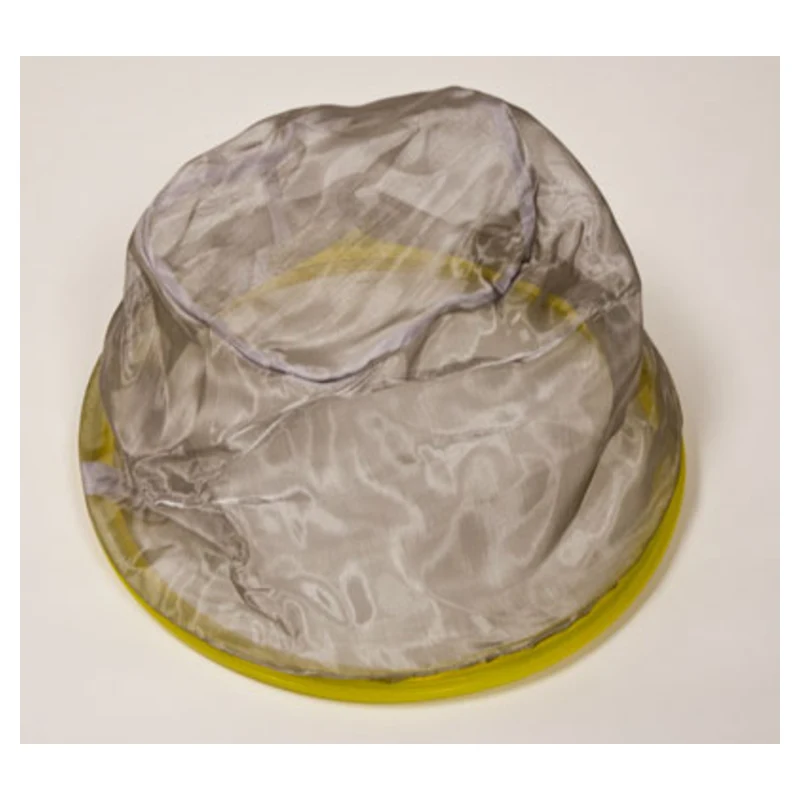
Liquid filter
Protects the filter housing during wet recovery and keeps liquid away from the HEPA section. Included.
Tiger-Vac
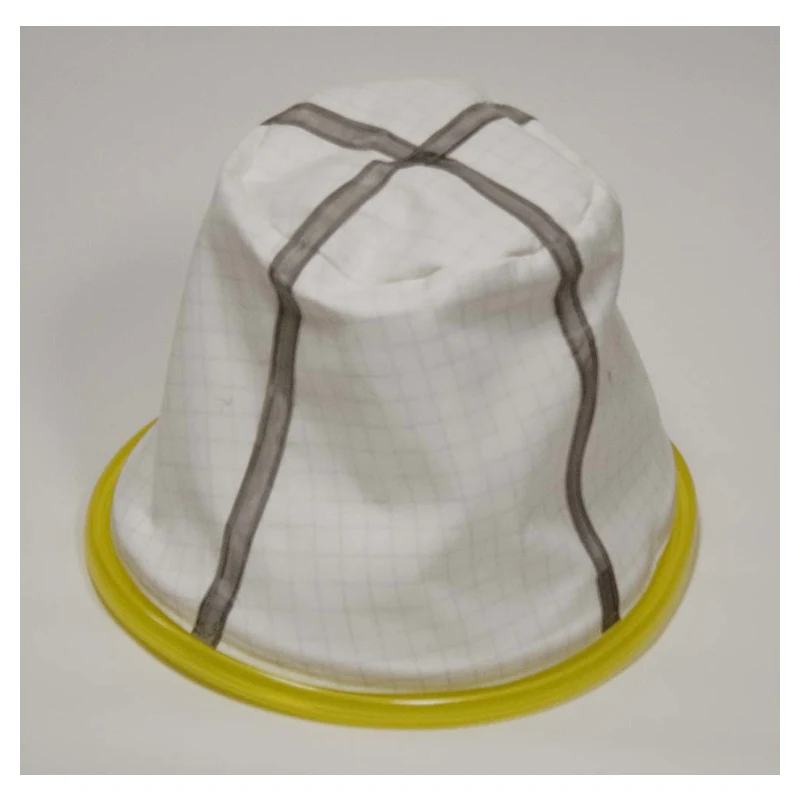
Cloth main filter, static conductive
3,480 cm² filter surface. Takes the bulk of the dust before the air reaches the HEPA filter. Included.
Tiger-Vac
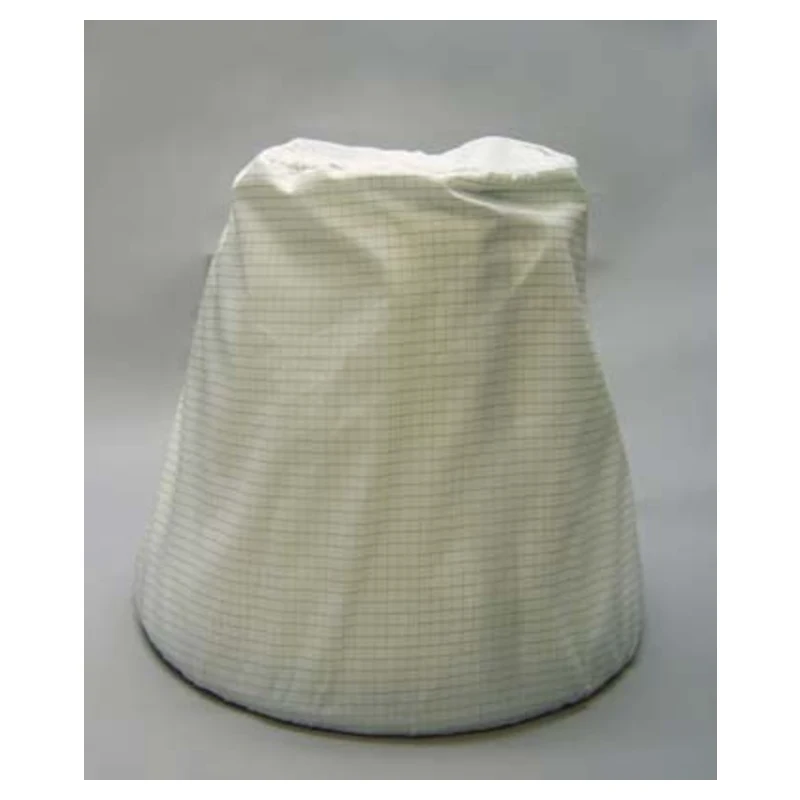
Pre-filter, static conductive
Fits over the main filter and extends its life with coarse or sticky dust. Included.
Tiger-Vac
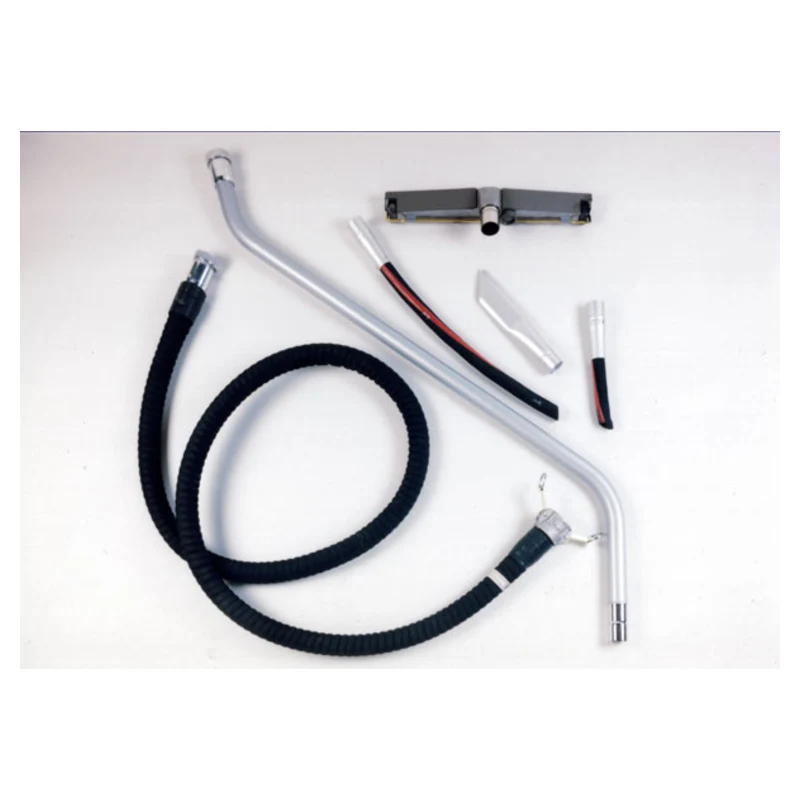
Nitrile tool kit, static conductive
Hose, tubes and nozzles in 38 mm, all static conductive, so the ESD chain runs unbroken from nozzle to unit. Included.
- HEPA filter H14: 6,500 cm² filter surface and 99.995 % efficiency at 0.3 µm. Every filter is aerosol leak tested before the unit leaves the factory.
- Middle Ring with activated carbon (MRAC): The carbon section between tank and motor head that adsorbs toxic and corrosive vapours before the air reaches the HEPA filter.
- 4-wheel dolly (4W): With static conductive castors, so the cart is part of the ESD chain.
- AISI 304 stainless steel: The entire unit, with under 10 ohms of resistivity.
Optional accessories
Ordered separately. All accessories are static conductive and keep the ESD chain unbroken.
Tiger-Vac
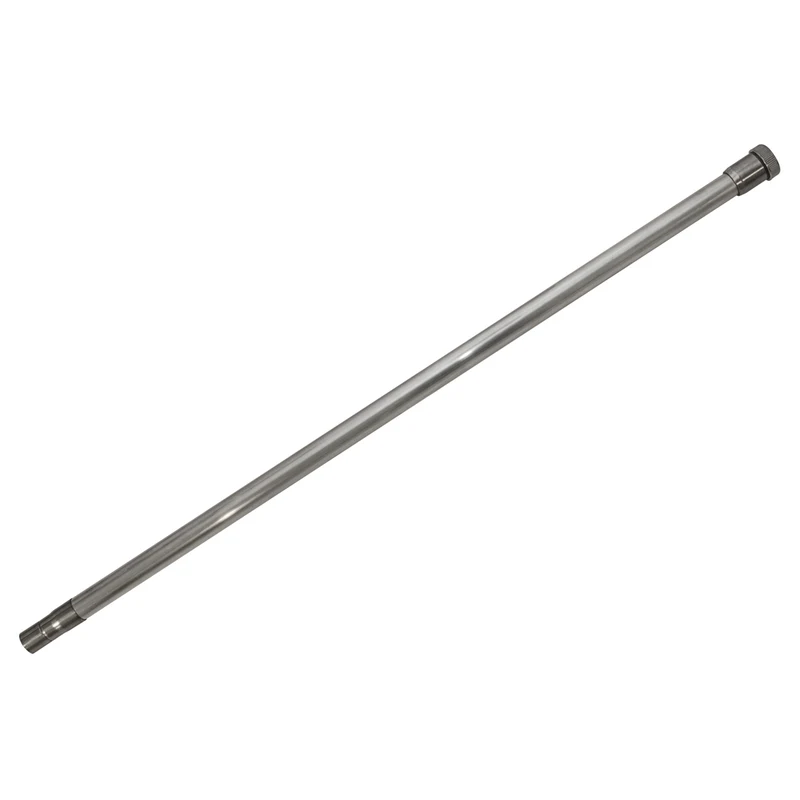
381162: Straight suction wand, 38 mm x 137 cm
Static conductive aluminium suction wand with stainless connector (381147B) and female screw thread. Long enough to reach the bottom of an IBC tote through the fill opening, and straight enough to go vertically down. Approved for HazLoc Div 1 (ATEX category 2) and Div 2 (ATEX category 3) as well as cleanrooms. Listed food grade by Tiger-Vac. See the four steps above.
Tiger-Vac
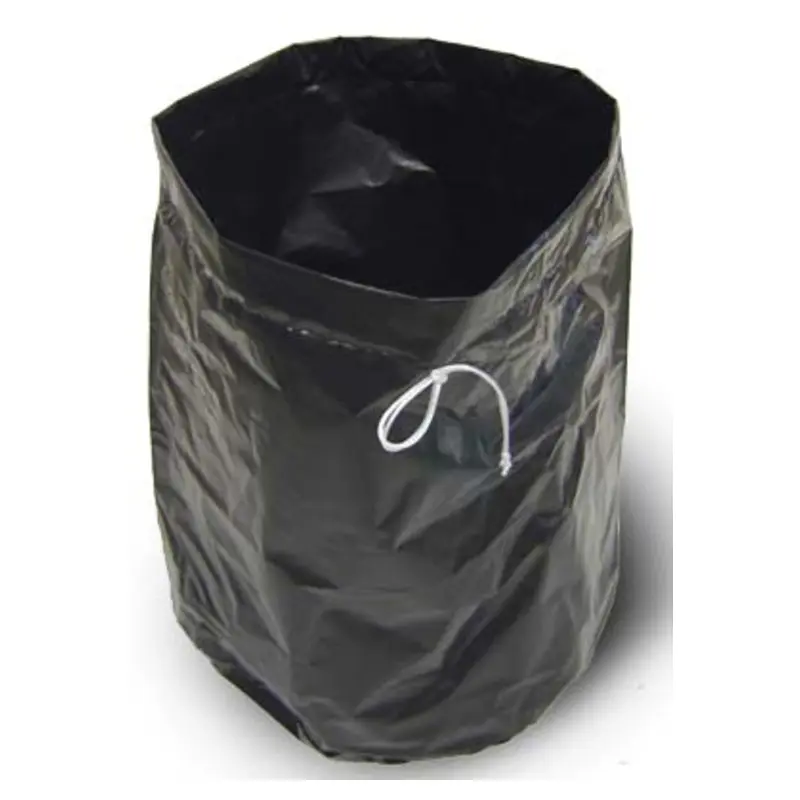
Static conductive poly liner with clips
Goes into the tank before use and is tied off afterwards, so the collected material can be lifted out without direct contact. The liner is static conductive and therefore cannot build a charge during disposal.
Particulair VACE
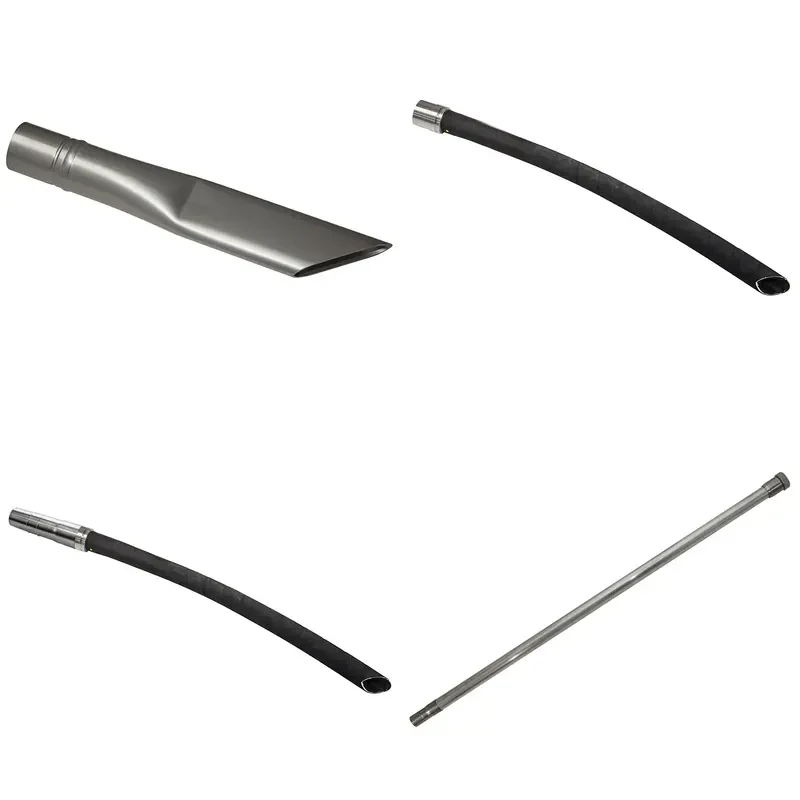
Every nozzle, brush and floor tool
The suction wand is only one of many. Our accessories catalogue VACE carries the full range of antistatic nozzles, brushes, tubes and floor tools for ATEX and ESD work, sorted by job: machine cleaning, floors, walls and ceilings, and high-level cleaning.
See the full accessories rangeQuestions and answers
What is the difference between the SS-10 and the electric EXP1-10 (4W) RE HEPA (MRAC)?
Same cabinet, same 22.7 L dust tank and 28.5 L liquid capacity, same MRAC carbon ring and the same HEPA H14. The difference is the drive. The EXP1-10 has a single-phase explosion-proof TEFC motor and is rated T3, meaning a maximum surface temperature of 200 °C. The SS-10 runs on compressed air through a venturi and has no electrical parts at all, which gives temperature class T6 at a maximum of 85 °C. Choose the EXP1-10 if you have a certified electrical installation and T3 is sufficient. Choose the SS-10 if you have compressed air, or if the specification calls for T6. In return the SS-10 has considerably higher vacuum: 4,570 mmH₂O against 1,550 mmH₂O.
What compressor does the SS-10 need?
At least 15 HP delivering 21.2 L/s (1,272 Nl/min) at 5.5 bar continuously, and a 1/2" (12.7 mm) air line to the unit. The unit can run around the clock as long as the compressor holds pressure. Bear in mind that the compressor is itself an ignition source: it belongs outside the classified area with the air line run in. That applies in particular to mobile diesel and petrol driven compressors.
What does the marking II 2GD Ex h IIC T6 Gb mean?
II means equipment group II, that is everything other than mines. 2GD is category 2 for both gas and dust, which corresponds to external Zone 1 for gas and Zone 21 for dust. Category 2 does not cover the interior of the equipment, that is Zone 0 and Zone 20, because that requires category 1. Ex h is the type of protection for non-electrical equipment to EN ISO 80079-36. IIC is the strictest gas group and covers hydrogen and acetylene as well. T6 is the strictest temperature class at a maximum of 85 °C surface temperature, and Gb is the equipment protection level for gas corresponding to category 2.
What does the carbon ring (MRAC) do?
The Middle Ring Activated Carbon is a carbon section sitting between the recovery tank and the motor head. It adsorbs toxic, corrosive and malodorous vapours from the work air before it reaches the HEPA filter. The HEPA filter catches particles, not vapours, which is why the carbon section is needed. How long a carbon charge lasts depends entirely on the substance and the concentration, so plan replacement around your own exposure. Contact us if you would like a proposal for a replacement programme.
How do I reach the bottom of an IBC container?
With the straight suction wand 381162, which is 137 cm long and 38 mm in diameter. An IBC tote is about a metre deep inside, and the fill opening on top is the only way in. The wand is straight, so it can go vertically down through the opening, and the 137 cm means you keep a firm grip above the rim when the tip reaches the bottom. The wand is aluminium and static conductive, so the ESD chain stays unbroken. See the four steps further up the page.
Is the HEPA filter standard or optional?
Standard. The SS-10 (4W) RE HEPA (MRAC) ships with HEPA H14, 6,500 cm² filter surface and 99.995 % efficiency at 0.3 µm, tested to IEST-RP-CC001 and MPPS to EN 1822. Every single filter is aerosol leak tested before the unit leaves the factory.
What is included and what is optional?
Included: HEPA filter H14, static conductive cloth main filter, static conductive pre-filter, liquid filter, Middle Ring with activated carbon, a complete static conductive nitrile tool and accessory kit, and a 4-wheel dolly with static conductive castors. Optional: a static conductive poly liner with clips for safe disposal, and the straight suction wand 381162 for IBC totes and deep vessels.
How is the collected material disposed of safely?
The static conductive poly liner goes into the tank before work begins. When the tank is full, the liner is tied off and lifted out without releasing the dust. Because the liner is static conductive, no electrostatic charge can build during handling. Use the same ESD chain on bags, hoses and accessories, and always bond and earth both the unit and the vessel you are cleaning before work begins.